
Blog / Service Center

Blog

All Service Center Medina, OH Honda Dealership Rick Roush Honda 2024 Honda Models Honda Ohio Tourism 2023 Honda models 2025 Honda Models Food 2023 Honda Lineup Ohio National Parks Used Cars Holiday HR-V Shopping CR-V 2023 Honda CR-V Accord Asian Restaurants Bakery Breakfast Civic Cleveland Zoo Mexican Restaruants Passport Pizza
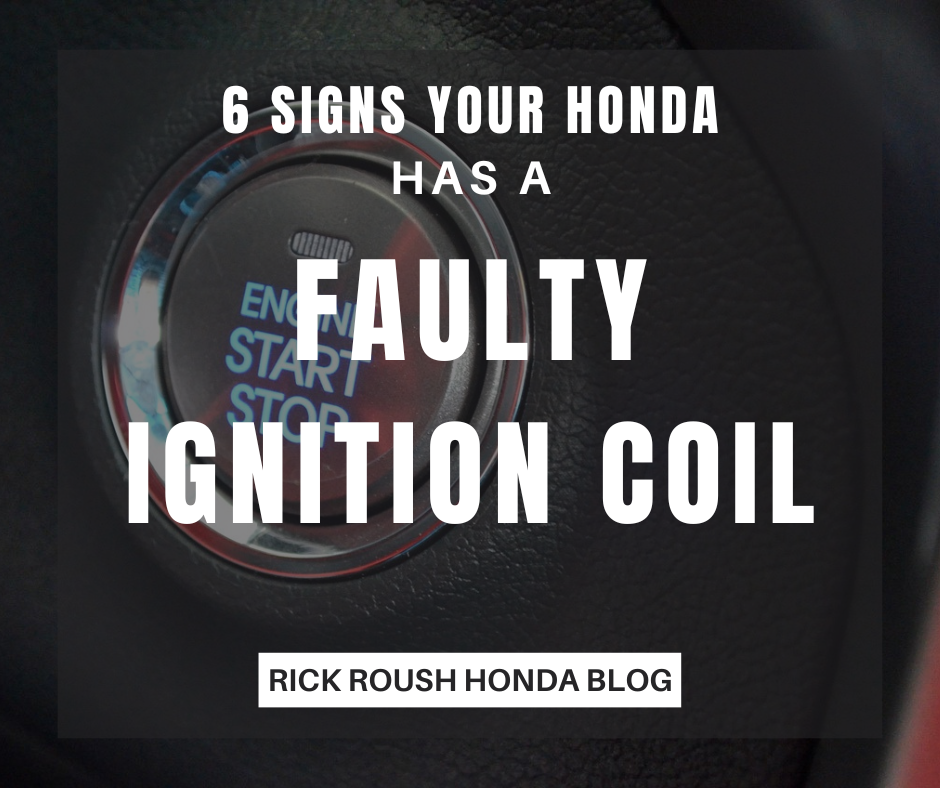
A photo of an engine ignition and the text: 6 Signs Your Honda Has a Faulty Ignition Coil - Rick Roush Honda Blog

6 Signs Your Honda Has a Faulty Ignition Coil

Your ignition coils help get your vehicle's engine started, so a faulty ignition coil can cause an array of different problems. If you're struggling to get your Honda to start, or if you notice any of the other signs we're going to talk about below, then you'll need to stop in at your Honda dealer for a repair. more 1. Your Honda Feels Sluggish If one or more of your ignition coils aren't working properly, then your Honda won't be able to perform as powerfully as usual. The car may feel sluggish to drive, or you may not be able to accelerate as quickly as you used to. This is usually one of the first signs that one of the ignition coils is faulty, so you should head to the dealer before any other issues arise. 2. Your Honda Is Jerking and Backfiring When an ignition coil isn't working properly, unused fuel can pass through your exhaust system and ignite. This can make your car jerk when you hit the accelerator, and it can also make your car start backfiring. A jerky car in traffic can be jarring and dangerous in traffic, so get to a dealer as soon as you can. 3. Your Honda Is Taking Longer to Start Your ignition coils convert the voltage supplied by your battery into a higher voltage that's strong enough to get your engine to turn over. If one of the coils isn't working properly, then you've got fewer coils at work to convert the voltage and get your engine to turn over. This can make starting the engine take longer. If most or all of your coils fail, then your engine might not start at all. 4. Your Honda Is Stalling Your car might start stalling when you've got a faulty coil, and that's definitely not something you want to happen in heavy traffic. If you're also having trouble starting the engine, then stalling can be even more of a problem. 5. Your Honda Is Misfiring Your Honda might start misfiring when you accelerate, stop, or are idling when you've got a problem with one of your ignition coils. Misfiring can damage your car's catalytic converter, so they're definitely a reason to head to the dealer ASAP. 6. Your Honda's Check Engine Light Is On If an engine-shaped orange light appears on your dashboard, then there's an issue under the hood. Your ignition coils may be faulty, or it may be another problem entirely. Now that you know what happens when you have a broken ignition coil, you'll know when to stop by the dealer. Come by Rick Roush Honda if you've got any problems, and make sure you come by at least once a year, so we can check out and tune up your Honda as needed. Image via
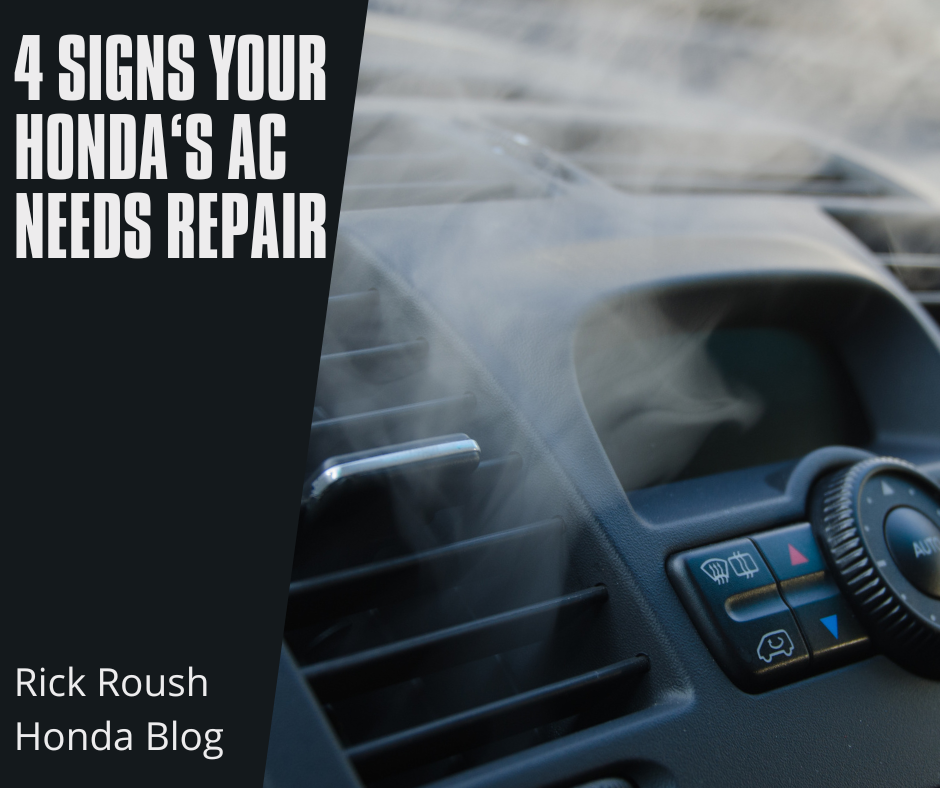
A photo of an AC smoking and the text: Car AC Not Working? Visit Your Honda Dealership Today - Rick Roush Honda Blog

Car AC Not Working? Visit Your Honda Dealership Today

The summers in Ohio can get pretty hot. No driver wants to be caught with their car AC not working while commuting to work or taking a day trip out of town. If you ever experience any of the following AC problems in your vehicle, a technician at your local Honda dealership can fix it and get your cabin comfortably cool once more. more The Air Stops Blowing If no air comes out of the AC vents when you switch it on, one of them may have become clogged by debris such as leaves coming in from the outside. If the vents are clear, something may be wrong with the blower fan instead; the blower fan's motor may have become worn out by age. Alternatively, the blower resistor, which regulates the level of air blowing into your cabin, may be malfunctioning. Electrical faults can also stop the blower fan from working. You can check the fuse box to see if the fuse has blown. The relay, which controls the electrical current going to the AC, might also be faulty. Only Warm or Hot Air If air is blowing into the cabin, but it won't cool down as it should, then it's more likely that you have a problem with the refrigerant. Refrigerant is the substance that circulates through the air-con system, continually converting from gas to liquid and back again, lowering the temperature as it does. When refrigerant fails to generate this coldness, the flow of refrigerant may have become interrupted by a malfunctioning expansion valve in the evaporator. You might also have a refrigerant leak on your hands. As the refrigerant is a thin, oily, transparent substance, a leak can be difficult to spot and repair without a special refrigerant dye injected by a technician. Bad-Smelling AC Air When any car part is left unused for months at a time, problems can develop. In the case of car AC, drivers often leave it unused over the colder winter months. During this period of disuse, fungi or mold can sometimes grow in any moisture that's trapped inside the AC. This fills the AC with bacteria and can result in a mildewy smell when you turn the AC on again. The AC Makes Strange Noises If a bearing inside your AC wears out, you might hear grinding or squeaking sounds as friction increases. Rattling sounds may point to a faltering compressor clutch or debris trapped inside the blower's fans. You'll usually need a technician to inspect the system and resolve the issue. If your Honda is exhibiting any of the signs listed above, have your AC repaired today by qualified professionals at Rick Roush Honda. We provide a prompt, professional, hassle-free vehicle purchasing and servicing experience, whatever your car-related needs might be. Image via

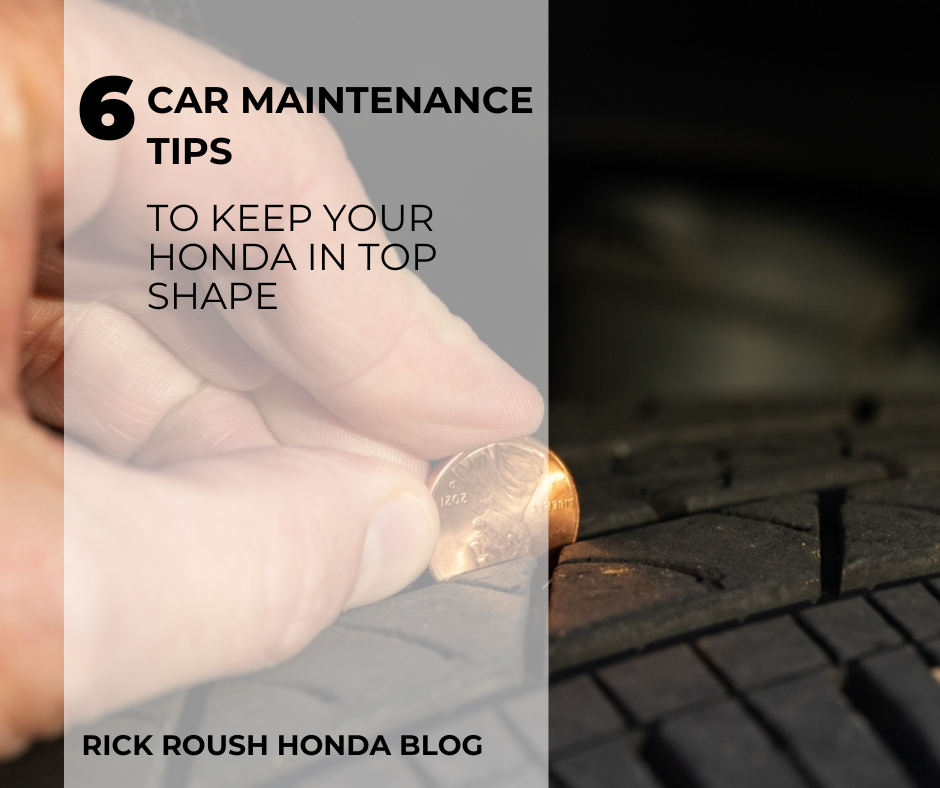
An image of someone checking the tread of a tire using a penny, and the text: 6 Car Maintenance Tips to Keep Your Honda in Top Shape - Rick Roush Honda Blog

6 Car Maintenance Tips to Keep Your Honda in Top Shape

Regular car maintenance is the key to keeping your Honda Accord, Civic, or Pilot running reliably and saving a bundle on costly repairs. Continue reading to discover six valuable maintenance tips that will help you keep your vehicle in top-notch condition for years to come. more 1. Stick to the Recommended Service Intervals To keep your Honda in its best condition, following the Honda factory-recommended service intervals is crucial. By having your vehicle inspected regularly by a qualified Honda technician, you can avoid high repair costs while ensuring your car runs smoothly. It's a cost-effective way to maintain your vehicle and keep it in top shape for the long haul. 2. Change the Oil Regularly By regularly changing the oil at the recommended intervals, your engine will stay lubricated, clean, and protected and last longer. Check your owner's manual for the oil change intervals or speak to your Honda technician. 3. Check the Fluid Levels To maintain your car's performance, check the oil, brake, coolant, transmission, and power steering fluid at least once a month and top them off if necessary. Check the consistency and color of the fluid, and if it looks discolored, ask your Honda technician for a replacement. 4. Inspect the Battery While checking the fluid, inspect your battery for signs of corrosion or damage. If you notice corrosion, remove it with a brush and a mixture of water and baking soda. If the battery is bloated or cracked, replace it immediately. If your battery is older than three years, ask your Honda technician to perform a battery test to determine whether a replacement is necessary. 5. Look After Your Tires Always keep your tires properly inflated to the recommended PSI to prevent wear, save on gas, and ensure your safety behind the wheel. Check the tires for tread wear, bubbles, and cracks monthly, and ask your Honda technician to rotate the tires every time you take your vehicle for an oil change. Regular tire rotations prevent uneven wear and prolong the life of your tires. 6. Keep Your Car Clean and Protected Wash your car regularly with specially formulated car shampoo to get rid of dust and grime that can cause scratches, and give it a wax every six months or so to provide a protective layer to protect the paint. Parking in a covered area, such as a garage or under a cover, will help protect your car's interior and exterior against the elements. To keep enjoying every mile behind the wheel of your Honda, routinely inspect your car and rely on qualified Honda technicians for routine maintenance checkups. Call Rick Roush Honda today to schedule a vehicle checkup, and our Honda-trained technicians will help you keep your vehicle running at its best. Image via

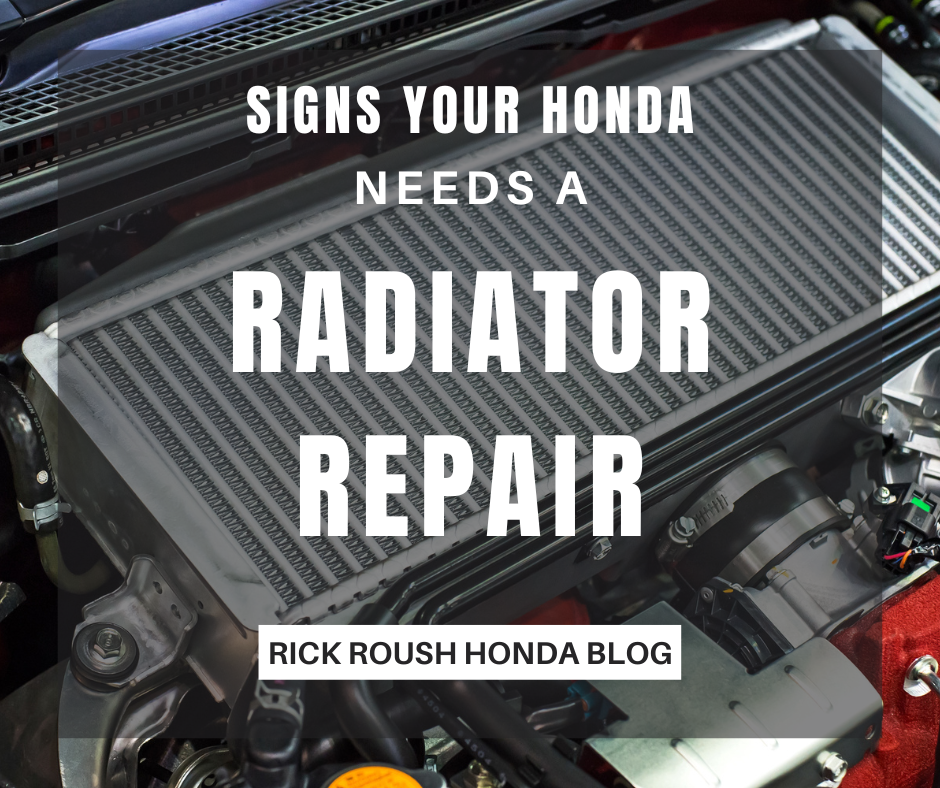
A photo of a radiator and the text: Signs Your Honda Needs a Radiator Repair - RIck Roush Honda Blog

Signs Your Honda Needs a Radiator Repair

Image Via Rick Roush Honda Radiators are a part of every car except electric vehicles. The radiator's function is to control the temperature in your engine by heat exchange. In time, a radiator can become worn or damaged, which inhibits the cooling process. If you have a failing radiator, it's important to visit your Honda dealership for a radiator repair. These are some signs that your radiator could be in trouble. more Rusted Radiator Rust is a problem for almost any metal object. Once it forms, it will eat away the metal until there's nothing left. Your radiator is protected against water damage by the grille and the hood. This means if you spot signs of rust on your radiator, you must have a coolant leak. Coolant is a 50/50 mixture of water and antifreeze, and if coolant leaks onto the radiator's metal components, it will cause rust. If you open the hood and see rust forming on your radiator, call us right away. Rust can't be permanently removed once it starts. The most that can be done is to temporarily remove it, and it will return. We can fix this problem by replacing your radiator and ensuring that there are no coolant leaks in the system that can cause this problem again. Failed Water Pump The water pump in your engine pumps coolant through the engine. It operates at variable speed to ensure that the coolant works as quickly as possible to remove engine heat. When you hit the gas, your engine works harder and generates more heat. Your water pump will automatically speed up to remove this heat and then slow down again once the engine temperature drops. If the pump fails, the coolant will be released into your engine but won't move. Without coolant, your engine will rapidly overheat. If your temperature gauge is going up, you could have a pump problem. We'll examine your engine and repair the cause of the problem. Loose Hoses Two thick rubber hoses connect the radiator to the cooling system. These hoses are tightly attached to the radiator and fixed in place with metal clamps. This secure, airtight fit is essential. Coolant moves at high speed and can easily be hotter than 300 F. A tiny hole or gap between the hoses and the radiator can cause a coolant leak. In time, the clamps can loosen due to the constant movement of the hoses as they carry hot, fast-moving coolant. If the clamps are not regularly checked, hot coolant can spray into your engine. Your engine will lose coolant, and the water in the coolant can create rust on various engine parts. We'll test your clamps and tighten or replace them. If your engine temperature is rising unexpectedly, call our service department ASAP at Rick Roush Honda. ​​​​​​​​​​​​​​​​

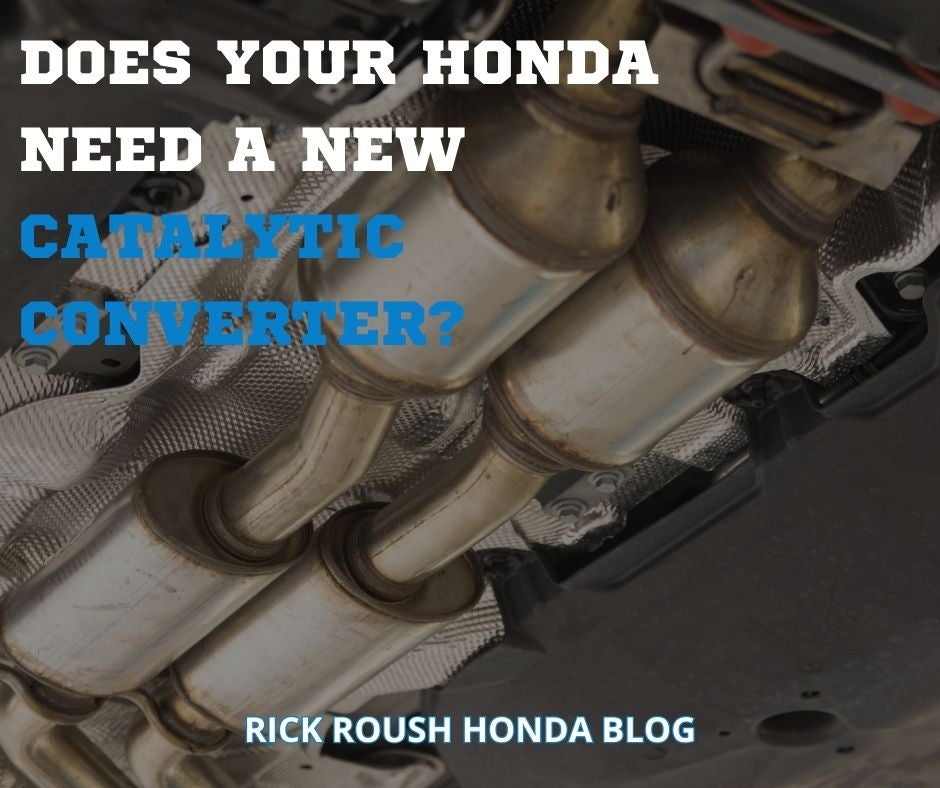
A photo of a Catalytic Converter and the text: Does Your Honda Need a New Catalytic Converter - Rick Roush Honda Blog

Does Your Honda Need a New Catalytic Converter?

​​​​​​​​​​​​​​​​​​​​​​​​On average, your car's catalytic converter will work effectively for ten years. A converter can become blocked, damaged, or burned out due to a problem in your engine. If your converter isn't working correctly, your exhaust will produce higher emissions. A failed converter will also decrease fuel efficiency and damage other engine components. These are a few signs you need to visit your Honda dealer for a repair. more Blocked Converter Once combustion in a cylinder is complete, the cylinder opens and dumps the remnants of the fuel-air mixture into your exhaust system. These gases flow into the converter, and they're changed into harmless chemicals and water through a combination of pressure, heat, and chemical reactions. Carbon is a byproduct of the conversion process. Over time, carbon will accumulate in the converter, and it can block the exit into the tailpipe. If this happens, engine gases are forced back into your engine. These gases contain fuel vapor, and this presence will alter the fuel-air ratio in the intake manifold. The excessively high quantity of fuel can cause your engine to shut down as there is insufficient air for combustion. We'll remove the converter, clear the blockage, and reinstall it. Check Engine Light The check engine light is a vital early warning of a problem in our engine. All your Honda's important systems have sensors attached to them. These sensors monitor the components they're attached to and report the component's health and any unusual activity to your computer. If a problem is identified, your computer will generate an error code and the check engine light will illuminate. Some situations that can cause the warning light to illuminate include a blockage, overheating, or converter failure. An illuminated check engine light might not be caused by a converter problem. Our technicians will connect your car's computer to our diagnostic system. The diagnostic system will identify the engine component that has a problem, and we'll repair or replace the component. Rattling Noises The converter is a relatively small component, and converting gases requires a large surface area. The interior of the converter is designed as a honeycomb, which provides the necessary large surface area. A honeycomb is strong when it's intact, but age and damage can weaken the structure. Parts of the honeycomb can crack and break off. Broken honeycomb sections can rattle inside the converter as you drive. These broken components will cause further damage to the converter. If you hear rattling noises when you're driving, we'll investigate. A damaged honeycomb can't be repaired, but we can replace the converter to fix this problem. Converter problems worsen over time, and your car will fail an emissions test. Call us today at Rick Roush Honda if your vehicle is showing any of the signs listed above.

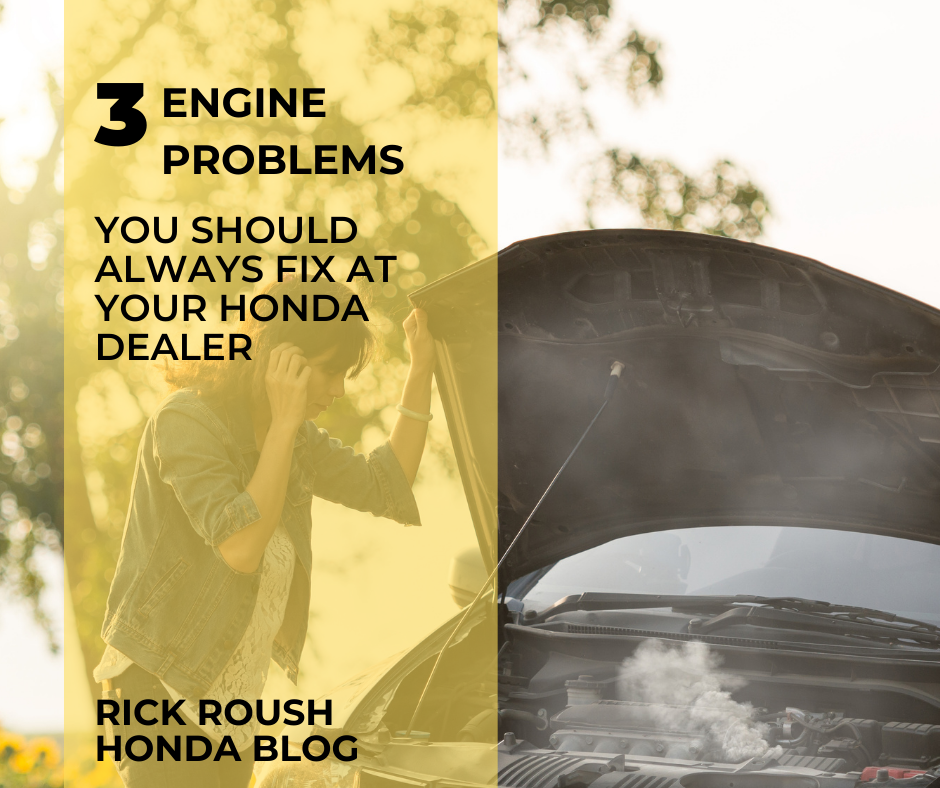
A graphic containing an image of a woman standing above an overheating car with the text: 3 Engine Problems You Should Always Fix at Your Honda Dealer Rick Roush Honda Blog

3 Engine Problems You Should Always Fix at Your Honda Dealer

Engine problems have an undeserved reputation for being expensive and time-consuming to fix. In most cases, a problem with your engine can be fixed relatively inexpensively if it's identified when the problem starts. If you have a problem with your engine, call your friendly Honda dealer right away. These are samples of some of the issues we can fix. more Starting Problems When you push the start button, several different components work together to start your engine. An electrical charge is sent from the battery to the starter solenoid. This charge is passed to the starter motor, which initiates the crank. Air and fuel are pulled into the intake manifold, where they mix. The fuel-air mixture is then drawn into the cylinders, compressed, and ignited to create combustion. A failing alternator, bad battery, or worn starter motor can all cause starting difficulties. Other potential causes are damaged wiring, damaged spark plugs, excessive pressure in your engine from a blocked catalytic converter, or a high fuel-to-air ratio. Our technicians will examine your engine, identify the cause of the problem, and repair it. Engine Overheating An overheating engine is a major problem. Your Honda has a very efficient cooling system that's designed to regulate engine temperature. The liquid coolant absorbs heat generated by your engine and transports the heat to the radiator. Inside the radiator, heat is removed from the coolant by heat exchange as cool air flows over the tubes. If your engine temperature is rising for no apparent reason, your engine is in danger of overheating. Driving a car with an overheating engine can cause permanent damage to the engine. We advise calling us ASAP so we can investigate. Overheating can be caused by several problems, including a coolant leak, a damaged thermostat, a broken water pump, or a clogged radiator. We'll find the cause of the problem and fix it. Oil Leaks Oil leaks are caused by worn or damaged components. This type of leak is more common in engines that are not regularly serviced. During your scheduled services, our technicians test seals, gaskets, and all other leak sources. Worn or damaged seals can easily allow pressurized oil to leak out. The most common sign of an oil leak is a puddle of gold, light brown, or black liquid underneath your car. Oil can also leak internally due to a damaged head gasket. The oil will find its way into your exhaust system, and your car's exhaust smoke will have a blue color. A lack of oil can cause friction damage to engine components, will increase the engine temperature, and can cause your engine to seize. We'll trace the source of the leak and repair it to fix this problem. If your engine is in trouble, call the experts right away at Rick Roush Honda.

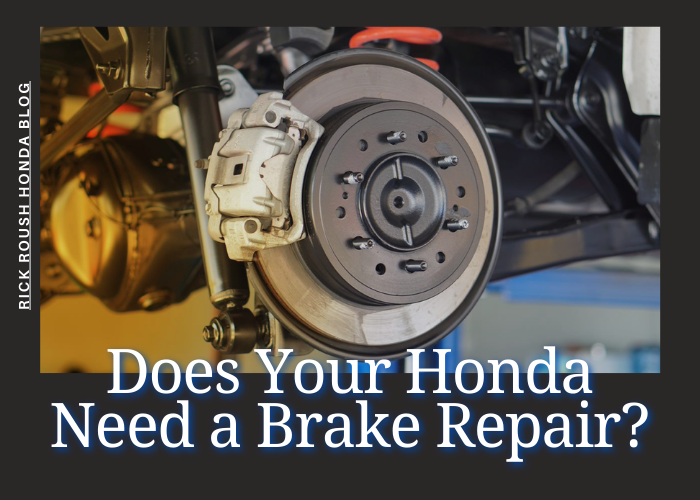
brake repair in Medina, OH

Does Your Honda Need a Brake Repair?

Your brakes are one of your Honda's most essential safety features, as they enable you to control your speed at any time. Brake components can wear out or get damaged, and this affects your Honda's braking ability. As your Honda dealer, we'd like you to know some of the signs that you need to visit us for a brake repair. Signs You Need a Brake Repair at Your Honda Dealer Soft Brake Pedal The braking system contains braking fluid, and this fluid is highly pressurized. High pressure is essential, as the average weight of a Honda is approximately 4,100 lbs, and the braking system must force it to stop moving almost instantly when you hit the brakes. You can feel the pressure inside the system as resistance when you press down on the pedal. If you step on the brake pedal and you feel little resistance, you have a serious brake problem. The lack of resistance means there is either a leak in the system and brake fluid is draining out, or there's an air bubble in the braking system. The lack of resistance means your brakes will be slower to respond than they should be and could even fail. We'll find and fix the cause of the problem. more Overheating Brake Fluid When you hit the brakes, the pressurized brake fluid is forced into the brake hoses and lines. Once you take your foot off the brakes, the fluid is withdrawn. If you have to ride your brakes, for example, you're driving downhill or are stuck in traffic, the brake fluid is kept in the hoses and lines. The pressure in the system generates heat, and this can cause the fluid to overheat. If you smell a foul burning chemical smell, your brake fluid could be overheating. If this happens, we advise pulling over ASAP and allowing your brakes to cool. Driving with overheating brake fluid is dangerous, as it loses its ability to generate hydraulic pressure. Without this pressure, your brakes are likely to fail. We'll examine your braking system to determine any other cause for the overheating fluid. Visible Damage Most of the braking system can only be seen from underneath your car. You can, however, see several of its vital systems by looking through the spokes of your wheels. If you kneel, you can see the flat rotor behind each wheel, the brake caliper that's positioned above the rotor, and the brake pads inside the brake calipers. If you use a flashlight, you might see signs of damage like a jammed caliper, scouring on the rotor, or even a small leak from a worn hose. Our technicians can more closely examine the system and repair any problems we find. If your brakes are slow to respond, or show any other signs of trouble, call us ASAP at Rick Roush Honda.

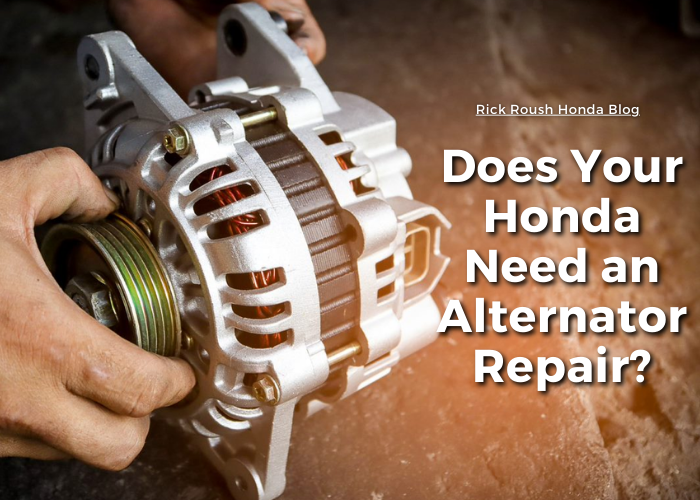
alternator repair in Honda

Does Your Honda Need an Alternator Repair?

The alternator is the center of your Honda's electrical charging system. It produces electricity, which is then transported to all your car's systems and devices. If your alternator is worn or damaged, your Honda dealer can fix the problem. These are a few signs that you may need an alternator repair very soon. Signs You Need an Alternator Repair at Your Honda Dealer Burning Smells As the alternator ages, it gradually becomes weaker. Components start to wear out or fail, and the alternator won't produce the level of electricity it once did. When your alternator can't produce enough power the electrical shortfall will become apparent. Signs of a lack of electricity in your car's headlights becoming dim, frequent electrical glitches, and other issues. When the alternator can't produce enough power, your car's computer will instruct it to work harder. The alternator will spin faster to try and generate more power, but a worn alternator will quickly start to produce a strong burning smell. This smell is caused by the metal heating up as it struggles to produce electricity. Our technicians will examine your alternator and replace it if it's worn out. more Flickering Headlights Headlight bulbs have a varied lifespan depending on the type of bulb. When a headlight bulb starts to fail, it will usually flicker for a while before it finally burns out. These bulbs can also flicker if the electrical supply they receive isn't stable. Bulbs require a constant and consistent power supply to operate correctly. If your alternator is wearing out, the power it supplies will drop. Your car's computer will have to adjust the power supplied to each component to maximize the usage of the available electricity. This can result in fluctuations in the amount of power supplied to the headlights, and they will flicker as a result. We can test your alternator for you. If your alternator is failing, we'll install a new one to fix the problem. Damaged Belt Tensioner The alternator is powered by the movement of the serpentine belt. This belt is connected to the crankshaft, and it runs across a series of pulleys. As the crankshaft turns, the belt moves and causes the pulleys to spin. One of these pulleys is connected to the alternator, which produces electricity in response to the movement of the serpentine belt. The belt is maintained at a constant tension by the belt tensioner. If the belt is too loose, it can slip off the pulleys. A belt that's too tight could snap. If the belt tensioner is damaged, the belt won't move at a consistent rate. This slows down the movement of the alternator and accepts your car's electrical supply. We'll examine the belt tensioner and adjust or replace it depending on the situation. If you suspect a problem with your alternator, call our service department at Rick Roush Honda.

transmission repair in Medina, OH

How to Tell When Your Honda Needs a Transmission Repair

A well-maintained transmission allows you to get the best performance from your Honda's engine. A worn or damaged transmission, in contrast, can result in an expensive repair or even cause an accident. As your Honda dealer in Medina, OH, we'd like you to know a few signs you could have a problem and you need to visit us for a transmission repair. Signs You Need a Transmission Repair at Your Honda Dealer Slipping Gears Your Honda transmission is designed to change gears on the instructions of your transmission computer. Once the gear changes, your transmission will remain in that gear until it's shifted again by the computer. A slipping gear occurs when the transmission unexpectedly shifts gear by itself. This can be very dangerous, as the gear usually slips into its previous position. more A transmission that's slipping makes driving unsafe, as you no longer have full control over your car. Your Honda has a safety feature for this event, and the computer will shift to a single gear and prevent shifting to any gear other than the park gear. This is a temporary solution, but it allows you to reach our service department so our expert technicians can find the cause of the problem and repair it. Transmission Won't Shift No driver thinks about their transmission shifting gears, as it happens automatically. As you drive and speed changes, the transmission computer shifts the gears flawlessly up or down. A transmission that suddenly fails to move is a major problem. If the transmission won't respond, your Honda won't be able to move even if the engine is running perfectly. A non-responsive transmission can be annoying or dangerous, depending on whether it happens when you start your engine or if you're driving when it suddenly occurs. The transmission's failure could be caused by a failed transmission computer, a faulty solenoid, a blocked transmission filter, or a broken sensor. We'll examine your transmission, identity the exact cause, and repair it. Dragging Clutch Around 3% of cars have a manual transmission, and a dragging clutch could be the bane of their lives. When you step on the clutch pedal in a manual, this movement releases the clutch disk from the flywheel and enables you to shift gears. If you have a dragging clutch, the clutch disk won't disengage, and you'll hear an awful grinding sound from the gears as you try and move the gear shift. A dragging clutch is usually caused by a slack clutch cable that reduces the leverage between the clutch pedal and the clutch disk. We'll check the cable and tighten it or install a new one if it's damaged. If you have any problem with your transmission, call us ASAP at Rick Roush Honda.

Honda Oil Change, Medina OH

How Long Has It Been Since Your Honda's Last Oil Change?

To keep your Honda engine lubricated, protected, and running efficiently, a regular Honda oil change from the qualified technicians at your Honda dealer is crucial. Routine oil changes will improve your engine's performance and ensure that your Civic, Accord, or Pilot always performs at its best. Honda Oil Change: How Long Has It Been Since Your Honda's Last Oil Change? Oil Change Intervals Oil lubricates your engine and prevents friction and wear. Over time, the oil becomes contaminated and ceases to protect your engine. The result is high fuel consumption and poor engine performance. Routine oil and filter changes at the factory-recommended intervals are crucial to prevent engine damage and ensure your Honda is fuel-efficient and on the road longer. more Generally, Honda recommends changing the oil in your car every 3,000 miles or six months if you drive an older vehicle and every 7,500 miles or six months for 2008 and later models. Check your owner's manual for your model's factory-recommended oil change intervals. Operating Conditions Various factors influence how often your car will need an oil change, such as the engine type, model, age, and conditions under which you operate your vehicle. If you drive your Honda under severe conditions, your car will need new oil more often. Severe driving conditions include driving in heavy traffic, on rough roads, towing heavy loads, and taking regular short trips. Ask your Honda technician for more information on driving conditions and to assist you with the best oil change schedule for your model and driving conditions. The Correct Oil and Filters Using the proper oil grade and the right filters for your Honda is vital to keep your engine well-lubricated and clean. Honda Genuine Oil is blended explicitly for Honda vehicles and tested to ensure extra protection and lubrication for optimal engine performance. Genuine Honda filters prevent harmful contaminants from reaching your engine. The information for the correct grade of oil for your model is in your owner's manual, or ask your Honda technician to assist you in choosing the right oil for your model's engine. Oil Change Specials Your dealer offers excellent money-saving deals on services and parts. Check their website for specials and coupons to save on your next oil change or maintenance service. You can also speak to one of the service consultants for more information. Convenient Appointment Scheduling Scheduling an oil change is easy and convenient. You can phone your dealer directly or conveniently book an oil change on their website by filling in the online form. A service consultant will contact you promptly to arrange a time that best suits you. If you stick to the oil change intervals and use quality oil, you will save money on gas, your engine will run at its best, and your Honda will last longer. Contact Rick Roush Honda today for an oil change to ensure your engine is well-lubricated, protected, and running smoothly.

Rick Roush Honda mechanic

4 Essential Services You'll Find at Your Medina, OH Honda Dealership

When it comes to your Honda, you want only the best quality services from experts you can rely on to keep your Civic, Accord, or Passport in excellent running condition. Your Honda dealership has cutting-edge technology and advanced equipment, stocks genuine Honda parts, and has a team of factory-trained and qualified Honda technicians who guarantee only the best, top-quality maintenance and repair services. 1. Superior Honda Maintenance and Repair Services Your dealership provides superior automotive services performed by Honda-trained technicians who maintain a high standard of workmanship. The highly qualified Honda technicians will assist you with all your vehicle's maintenance and repair requirements. The technicians know every component and system in your car, use specialized equipment, and fit genuine Honda parts. When a Honda technician performs maintenance and repair services, you can rest assured that your Honda is in expert hands. more 2. Oil and Filter Replacements One of the most vital maintenance services is regular oil and filter replacements to keep the parts lubricated, prevent engine damage, increase fuel efficiency, and prolong the life of your engine. Honda recommends a basic maintenance service that includes oil replacements with the proper grade and viscosity of oil, fluid checks and top-offs, brake inspections, tire inspections, tire pressure checks, and tire rotations at 7,500 miles or at least once a year. More comprehensive inspections, adjustments, and replacements will be performed at the mileage intervals after that. To ensure that your Honda never lets you down, follow your vehicle's service schedule and factory-recommended maintenance intervals in your owner's manual. 3. Brake Inspections and Brake Pad Replacements When you take your Honda for an oil change, the Honda technician will perform a thorough brake inspection, and the brake pads will be checked for wear. If your vehicle's brake pads are worn down to a thickness of 3.2 millimeters or lower, the technician will replace the pads with genuine Honda pads to prevent your brakes from failing. Genuine Honda brake pads are specifically designed and manufactured for your vehicle to Honda's highest standards and tested for reliability and safety. Genuine Honda brake pads prevent premature disc wear, reduce vibrations, and guarantee long-lasting performance. 4. Tire Inspections and Rotations Every time a Honda technician performs an oil and filter replacement, your vehicle's tires will also be thoroughly inspected. The technician will check each tire's tread depth and sidewalls for cuts, cracks, and bulges and inflate the tires to the proper pressure levels. All four tires will also be rotated to ensure even wear and extend the life of your vehicle's tires, saving you money in the long run. The Honda technicians at your dealership have the knowledge, skills, and experience to ensure that your Honda is always reliable, fuel-efficient, and safe on the road. Call Rick Roush Honda today to schedule a service appointment, and the qualified Honda technicians will ensure your vehicle runs at its best.

Contact Us

Fill out this form below and we'll contact you shortly
*Required Fields